

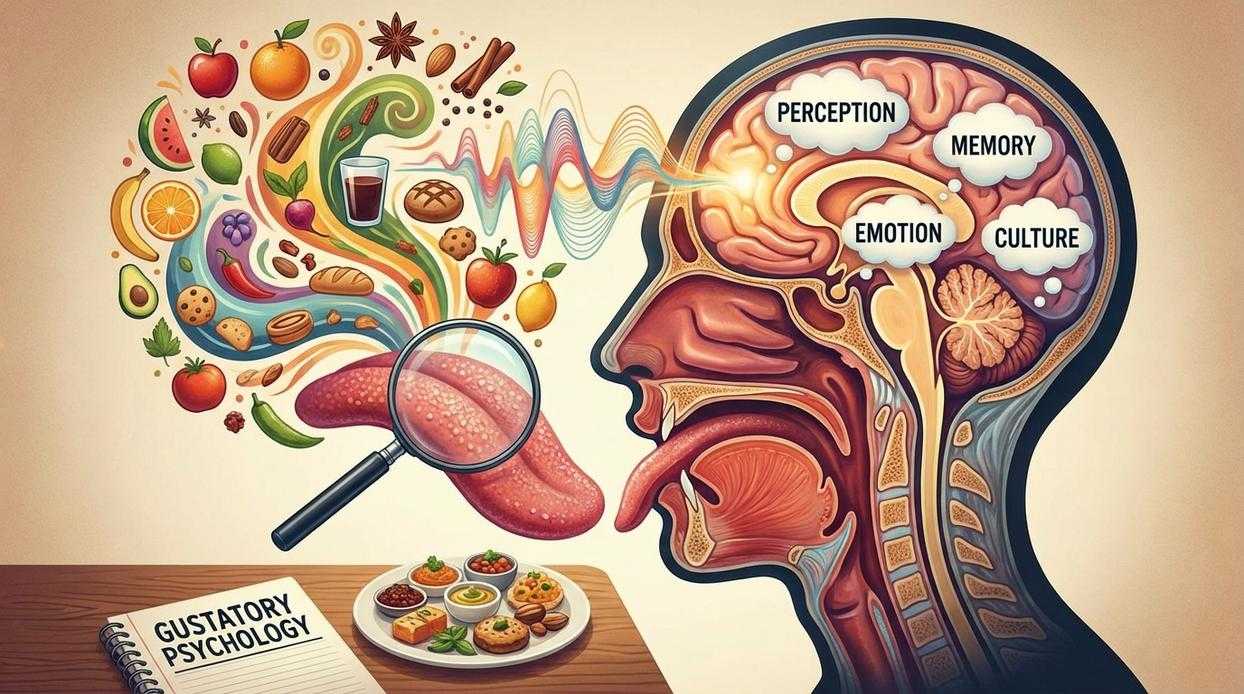
Why do you love the sharp bite of blue cheese while someone else recoils at the smell? The answer lies in the psychology of taste preferences—a complex interplay of genetics, memory, culture, and sensory cues. Taste may feel simple, even instinctive, but it’s shaped by far more than your tongue. From inherited traits that make cilantro taste soapy to childhood memories tied to comfort foods, your cravings tell a deeper story. Even factors like texture, aroma, and the color of your plate subtly guide what you enjoy. This article unpacks the biological and psychological forces that define your unique culinary identity.
The Blueprint of Flavor: Your Genetic and Biological Inheritance
Understanding the psychology of taste helps to explain why we crave the bold, aromatic flavors found in Middle Eastern cuisine, making it a perfect segue into our exploration of key herbs and aromatics that elevate these dishes – for more details, check out our Key Herbs and Aromatics in Middle Eastern Dishes.
Why does broccoli taste pleasantly green to some and aggressively bitter to others? Blame the genetic lottery. A key player is the TAS2R38 gene, which influences how strongly you detect bitter compounds found in foods like broccoli, kale, and coffee. Version A of this gene? Bitter tastes sharp and intense. Version B? The same bite feels mild, even enjoyable.
Supertasters vs. Non-Tasters
Think of taste sensitivity as a spectrum:
- Supertasters: Higher density of papillae (taste buds), heightened sensitivity to sweetness, saltiness, and especially bitterness
- Non-tasters: Fewer papillae, milder flavor perception
Side-by-side, a supertaster sipping black coffee may wince, while a non-taster shrugs and asks for a refill. Same cup, different reality (nature’s original A/B test).
Evolutionary Hardwiring
Humans are wired to prefer sweet (energy-rich calories) and salty (essential minerals) flavors, while instinctively distrusting bitter and sour, which historically signaled toxins or spoilage. This evolutionary safeguard still shapes modern cravings—yes, even your late-night dessert run.
Understanding the psychology of taste preferences helps explain why flavor debates get heated. It’s not stubbornness. It’s biology versus biology.
The Flavor of Memory: How Culture and Experience Write Your Taste Story
The Critical Window of Childhood
Between infancy and early childhood, the brain builds what researchers call a “flavor library” — a mental catalog of tastes, textures, and aromas that quietly guides adult cravings. During this period, repeated exposure reduces food neophobia (the fear of new foods). A child offered broccoli ten times is far more likely to accept it than one who tries it once and rejects it (parents everywhere, take note). Studies show repeated tasting increases acceptance, even without added sugar or salt (Birch & Marlin, 1982).
This is where the psychology of taste preferences begins to hardwire patterns. Competitors often stop at “kids like sweet things.” But the deeper truth? EARLY VARIETY predicts ADULT FLEXIBILITY. A broad flavor library creates adventurous eaters; a narrow one reinforces caution.
Cultural Conditioning
Culture decides what counts as “delicious” or “disgusting.” Spice tolerance in India or Mexico develops through gradual exposure, while fermented foods like kimchi or natto are comfort staples in some regions and shock factors in others. These norms aren’t genetic destiny — they’re learned scripts.
Consider:
- Chili heat as celebration versus punishment
- Blue cheese as delicacy versus “expired dairy”
- Bitter melon as medicine versus mistake
Even visual cues matter — as explored in how color influences our perception of food (yes, we really do taste with our eyes first).
Taste-Aversion Learning
One bad experience can override YEARS of positive exposure. If you get sick after sushi, your brain links nausea to seaweed, even if the culprit was unrelated (Garcia et al., 1955). This survival mechanism is powerful and stubborn.
Counterargument: “It’s just picky eating.” Not quite. Taste aversion is rapid, emotional learning — and it sticks. Pro tip: gentle reintroduction in neutral settings can sometimes rewrite the story.
You really do eat with your eyes first. I’ve tasted identical strawberry drinks where the brighter red one seemed sweeter (even when sugar levels matched). That’s not magic; it’s the psychology of taste preferences at work. Color sets expectation, and expectation shapes flavor. Plating matters too. A neatly arranged salad feels fresher than the same ingredients tossed carelessly (we judge books and burgers by their covers).
Texture and sound are underrated heroes. Consider:
- Crunch signals freshness and saltiness.
- Creaminess suggests richness.
- Fizz implies sharpness and excitement.
When a chip snaps loudly, your brain registers it as MORE flavorful. Studies show sound can alter perceived freshness (Spence, 2015). A stale, silent chip tastes dull because your ears miss the cue. It’s basically culinary ASMR, minus the whispering.
Smell, though, is the powerhouse. Up to 80% of what we call taste is actually aroma processed through olfactory receptors (Shepherd, 2012). Aroma molecules travel retronasally—up the back of your throat to your nose—unlocking complex notes like vanilla or smoke. Block your nose and chocolate turns flat. For me, this is why reheated leftovers rarely impress; aroma fades first. Pro tip: warm spices gently to revive their scent before serving again.
The Emotional Palate: How Mood and Mindset Influence Cravings
Comfort Food and Nostalgia
That first bite of your grandmother’s stew can feel like a warm blanket. This isn’t accidental; your brain links taste and memory through the hippocampus, creating powerful emotional associations. In the psychology of taste preferences, familiar flavors signal safety and belonging. Try this: recreate a childhood dish and notice the emotions that surface. Write them down. You may find you’re craving comfort, not calories.
Stress and Cravings
When stress hits, cortisol—the body’s primary stress hormone—rises. Cortisol increases appetite and nudges you toward high-fat, high-sugar foods because they activate the brain’s reward system (hello, dopamine). Ever wondered why deadlines make cookies irresistible? Practical tip: pause for five deep breaths before snacking to lower cortisol slightly.
Context Is Everything
Lighting, music, and company reshape flavor perception. Dim lights and good friends can make a simple meal taste luxurious. Upgrade your environment: plate thoughtfully, reduce distractions, and savor slowly.
Crafting Your Culinary Identity
Your taste profile isn’t random—it’s a mosaic shaped by genetics, childhood memories, cultural influences, and your current emotional state. When you understand the psychology of taste preferences, you begin to see why you crave certain flavors and avoid others. That awareness gives you power. Instead of eating on autopilot, you can choose with intention and curiosity.
If you’ve ever felt stuck in the same food routine, now you know why—and how to change it. Start small: try a familiar dish in a new setting, focus closely on texture and aroma, or remix a favorite flavor with an unexpected twist.
Ready to break out of bland habits? Begin your own taste experiment today and discover flavors you didn’t know you loved.
 Kitchen Operations & Prep Specialist
There is a specific skill involved in explaining something clearly — one that is completely separate from actually knowing the subject. Brandon Schwartzimba has both. They has spent years working with culinary buzz in a hands-on capacity, and an equal amount of time figuring out how to translate that experience into writing that people with different backgrounds can actually absorb and use.
Brandon tends to approach complex subjects — Culinary Buzz, Curious Insights, Fusion Meal Ideas being good examples — by starting with what the reader already knows, then building outward from there rather than dropping them in the deep end. It sounds like a small thing. In practice it makes a significant difference in whether someone finishes the article or abandons it halfway through. They is also good at knowing when to stop — a surprisingly underrated skill. Some writers bury useful information under so many caveats and qualifications that the point disappears. Brandon knows where the point is and gets there without too many detours.
The practical effect of all this is that people who read Brandon's work tend to come away actually capable of doing something with it. Not just vaguely informed — actually capable. For a writer working in culinary buzz, that is probably the best possible outcome, and it's the standard Brandon holds they's own work to.
Kitchen Operations & Prep Specialist
There is a specific skill involved in explaining something clearly — one that is completely separate from actually knowing the subject. Brandon Schwartzimba has both. They has spent years working with culinary buzz in a hands-on capacity, and an equal amount of time figuring out how to translate that experience into writing that people with different backgrounds can actually absorb and use.
Brandon tends to approach complex subjects — Culinary Buzz, Curious Insights, Fusion Meal Ideas being good examples — by starting with what the reader already knows, then building outward from there rather than dropping them in the deep end. It sounds like a small thing. In practice it makes a significant difference in whether someone finishes the article or abandons it halfway through. They is also good at knowing when to stop — a surprisingly underrated skill. Some writers bury useful information under so many caveats and qualifications that the point disappears. Brandon knows where the point is and gets there without too many detours.
The practical effect of all this is that people who read Brandon's work tend to come away actually capable of doing something with it. Not just vaguely informed — actually capable. For a writer working in culinary buzz, that is probably the best possible outcome, and it's the standard Brandon holds they's own work to.